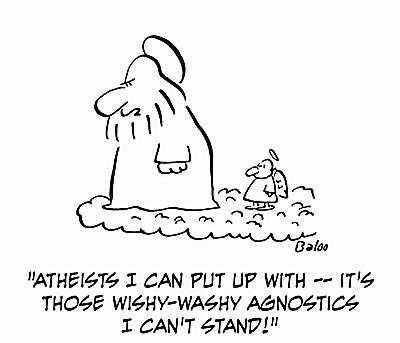
Over the past week, I read the popular(yet controversial) book called The Shack. I had heard a lot about it for a few months now, but after seeing some of the book quotes and pastors on YouTube railing against it being "evil"...you know I just had to pick it up :).
 Its a fictional story about a guy named Mack, whose child is abducted and brutally murdered in an abandoned shack. A few years later, Mack gets a note in the mail from God inviting him back to that very same shack...where Mack spends the weekend asking God all sorts of questions. The Trinity and the way it is presented, is probably one of the most controversial parts of it. Seeing as God the father is portrayed as a big black woman, the holy spirit is an Asian woman, and Jesus is well...a middle eastern carpenter(as you would expect him to be anyway lol). This caught me off guard at first, and sort of weired me out...but then I realized it would have been too cliche and stereotypical for it to be two bearded old men in robes, and a dove/tongue of fire floating around (hence the point was to break stereotypes). Anyway, I wont give all the details since, I think you should read it if you haven't yet. But I just wanted to take a minute to talk about some of my favorite parts out of it:
Before his youngest daughter (Missy) is murdered, Mack tells the story of a Indian princess who had to jump off a cliff, in order to save her people. Missy asks Mack if he would ever ask her to jump off a cliff, he replies,
"No , honey. I will never ask you to jump off a cliff, never, ever, ever"
"then will God ever ask me to jump off a cliff?"
"No, Missy. He would never ask you to do anything like that."
This is the first of many hints at universalism the book provides. Though it always does so in a manner that doesn't totally pin-point and complete the idea. It was also the first part of the book that made me teary eyed, because no loving human father would make their child jump off a cliff. And yet, so many people believe God will make most of His creations jump off a cliff into an everlasting, unpurposed, pit of torment.
God's voice had been reduced to paper, and even that paper had to be moderated and deciphered by the proper authorities and intellects. It seemed that direct communication with God was something exclusively for the ancients and uncivilized, while educated Westerner's access to God was mediated and controlled by the intelligentsia. Nobody wanted God in a box, just in a book. Especially an expensive one bound in leather with gilt edges, or was that guilt edges?
This little bit made me giggle, because it made me think of a lot of fundamentalists I talk to that accuse me of not "properly" interpreting scripture. There seems to be this idea in religion that everything we think about God or the Bible needs to be tested and interpreted by the "proper" spiritual geniuses, whom have been apparently gifted with all the right beliefs. The thing that's funny to me about that though, is that the "proper" authority is apparently never the one that disagrees with your theology, only the one that disagrees with the person you're talking to. So when we throw around terms like right theology and proper interpretation, we're really just trying to prove something as true, according to our biases and personal perspectives...not according to some indisputable fact or method. Which at the end of the day, seems pretty silly.
This is a part where God (or Papa) is talking to Mack, and he says
"but your choices are also not stronger than my purposes, and I will use every choice you make for the ultimate good and most loving outcome".
Then a page later the chapter ends with Mack saying
"I just cant imagine any final outcome that would justify all this"
"Mackenzie." Papa rose out of her chair and walked around the table to give him a big squeeze. "Were not justifying it. We are redeeming it."
I think its easy for us Christians to think that the most loving outcome is 5% of humanity being saved, while most are forever being incinerated, due to their bad choices(because common sense tells us that's what they really want). That God attempts to put out the forest fire that is our sin, and for the most part, fails. Then God sweeps the remains of billions under the rug of Heaven, smiles and shrugs. But perhaps, God is really more purposed and loving then that. Perhaps hes not trying to simply put a band-aid on the human condition, but rather was smart enough from the begining, to know how to ultimately redeem every single one of us despite our bad choices and misunderstandings.
This is a part where Mack is in a room talking with what is supposed to be a projection/embodiement of Gods justice. They go through this whole conversation about judgment and then she tells Mack that he must choose two of his children to go to heaven, and three of them to spend eternity in Hell. He obviously, freaks out.
"Mackenzie, I am only asking you to do something that you believe God does. He knows every person ever concieved, and he knows them so much more deeply than you will ever know your own children. He loves each one according to His knowledge of the being of that son or daughter. You believe He will condemn most to an eternity of torment, away from His presence and apart from His love. Is that not true?"
Anyway, it goes on and Mack decides that he cant possibly decide between his children because,
For him, it wasnt about their performance; it was about his love for them
When I read this, it made me shed a few tears, because it reminded me of how many look at the concept of predestination and judgment in general. Many believe that God created all these people in the world, knowing all the things that entangle them to deception...yet only picked a few of them to be saved from it. No father could possibly pick amoungst his children, for some to be damned and some to be saved...yet we believe a God who is love would do so? More over, we call that perception of God "just" and "holy"? Sometimes, I wonder how I made those concepts work in my mind for all those years without completley shattering eachother in conflict.
Theres a part where Jesus says,
"Those who love me come from every system that exists. They were Buddhists or Mormons, Baptists or Muslims; some are Democrats, some Republicans and many dont vote or are not part of any Sunday morning or religious institutions[...] I have no desire to make them Christian, but I do want to join them in their transformation into sons and daughters of my Papa..."
"Does that mean," said Mack, "that all roads will lead to you?"
"Not at all. Most roads dont lead anywhere. What it does mean is that I will travel any road to find you."
This quote was actually one I was shown before hand, and made me want to read the whole book. And I think this, whether intended or not, sums up the universalistic position. Its not that all religions and beliefs are neccesarily correct, or that they all (in of themselves) lead one to salvation in God. Its simply that God is willing and able to travel any of those roads of belief or lifestyle to find that person and draw Him unto himself...be it in this life or afterwards, be it in the Christian religous structure or not. Jesus is not limited to the Christian religion we have created around His teachings, or other scriptures. And His will and unfailing purpose I believe is to find and redeem every person, regardless of the road of life they are on.
Anyway, there is alot more that I highlighted in the book, but this blog is getting long as it is. But Im sure I will bring up other parts of it in other blogs in the near future.